

Advancing low-carbon solutions and addressing GHG emissions
Transition to a low‑carbon economy
Methanex takes a pragmatic approach to the transition to a low‑carbon economy, considering the pace of the energy transition in shaping our business strategy. We continue to operate and invest in our manufacturing and shipping assets to reduce emissions intensity, manage climate‑related risks, and position our business for long‑term success.
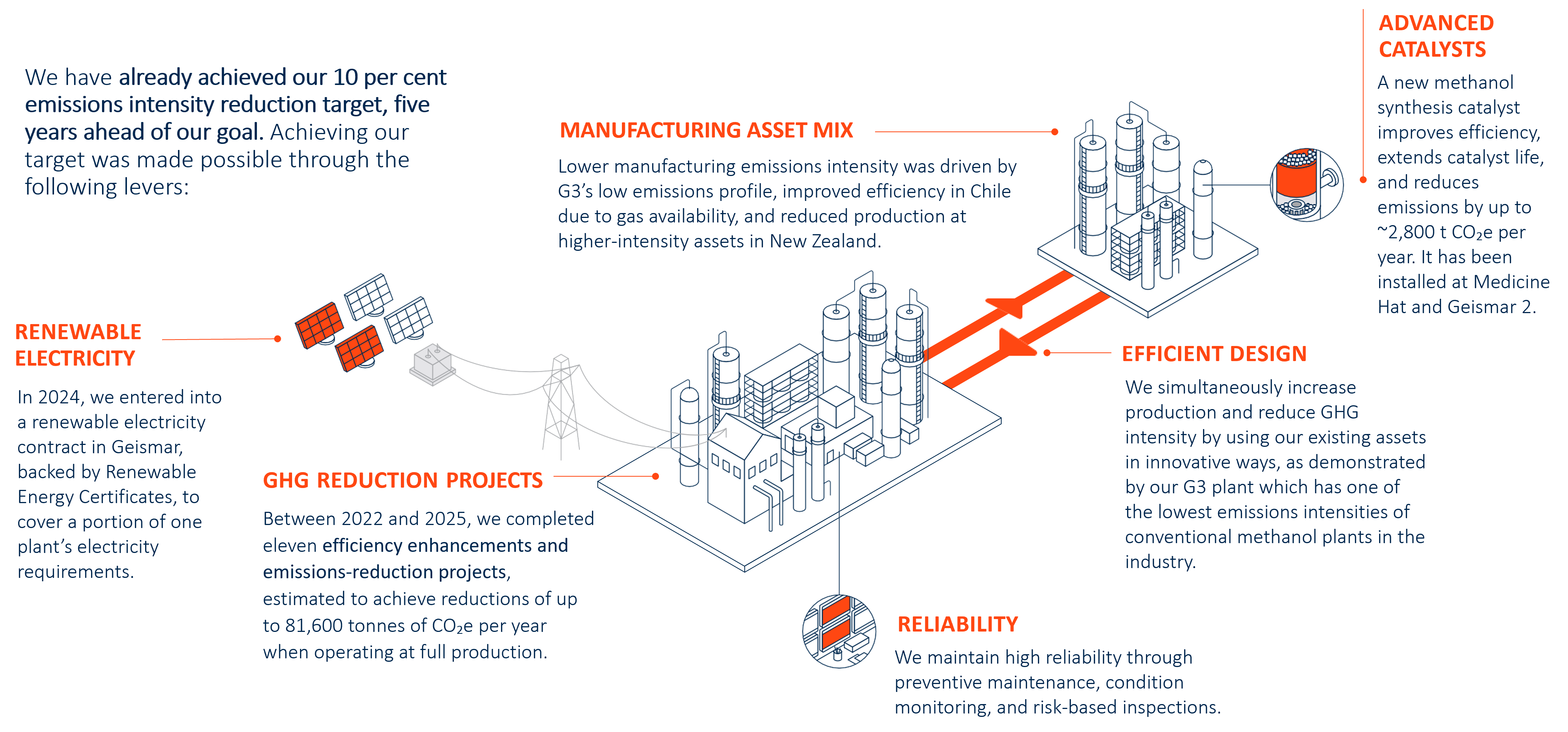
In 2025, we achieved our target to reduce Scope 1 and 2 manufacturing emissions intensity by 10 per cent from a 2019 baseline—five years ahead of schedule. With this milestone reached, we are evaluating opportunities to further reduce emissions across our operations.
Our Approach
Three pillars guide our approach to the transition to a low‑carbon economy:
 |
Reducing emissions from our operations
We invest in efficiency improvements, reliability initiatives, and best‑in‑class technology to reduce emissions from manufacturing and shipping. This includes operational improvements at existing sites, low‑emissions design for growth projects, and emissions‑reduction initiatives across Waterfront Shipping. |
 |
Progressing low-carbon solutions
We are evaluating opportunities to produce low‑carbon methanol by modifying existing assets, including carbon capture, biomethanol, and e‑methanol pathways. This staged approach allows us to respond to customer demand while managing costs and capital intensity. |
 |
Growing demand for methanol
We continue to support growing demand for methanol as both an essential chemical building block and a transition‑ready fuel. Our efforts focus on marine fuel, vehicle fuel and fuel additives, thermal applications, and low‑carbon methanol as a chemical feedstock, supported by advocacy, partnerships, and collaboration across the value chain. |
GHG emissions
We produce conventional methanol using natural gas as a feedstock, and natural gas combustion in the reforming stage of our manufacturing process is the primary source of GHG emissions from our operations. Producing methanol and ammonia requires significant energy, since the high-temperature reforming and syngas generation steps occur at approximately 850–1,000°C. Methanol produced from natural gas has a direct (Scope 1 and 2) emissions intensity (tonnes CO₂e per tonne of methanol) that is, on average, five times lower than methanol produced with coal.
In 2025, we reduced our operational emissions through: achieving full production from our G3 plant, which has one of the lowest emissions intensities of conventional methanol plants in the industry; our manufacturing asst mix; a focus on improving plant reliability; and emissions reduction projects.
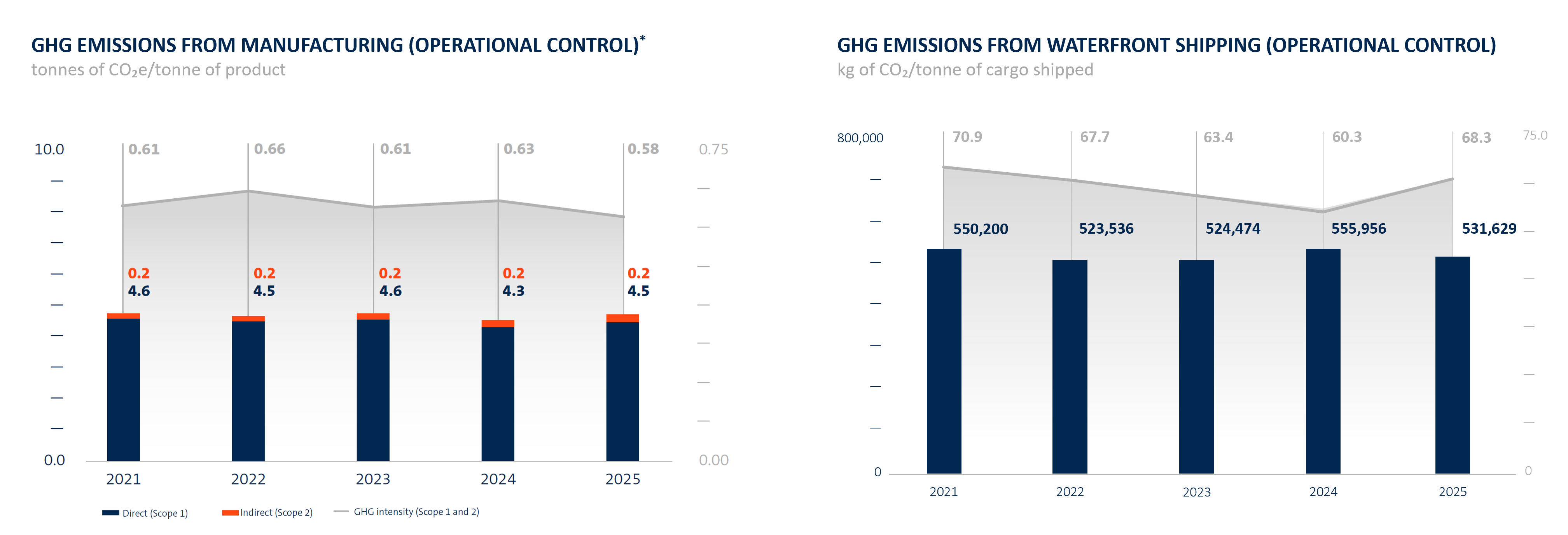
Waterfront Shipping is a subsidiary of Methanex that specializes in the safe, responsible, and reliable transport of methanol and backhaul of clean petroleum products, and is a key component of our integrated global supply chain. 85 per cent of our methanol is transported by our Waterfront Shipping ocean vessels, with the remainder transported by rail, truck, pipeline, or inland barge.
While our direct Waterfront Shipping emissions were lower in 2025, emissions intensity increased due to longer shipping routes on average, and a lower volume of backhaul cargo shipped.
How we have reduced our GHG emissions
To learn more, visit pages 18 to 28 of the 2025 Sustainability Report.